Address:
7909 W Grand Pkwy S
Suite 280
Richmond, Texas 77407

Is Your Child Ready for Back-to-School Eye Exams?
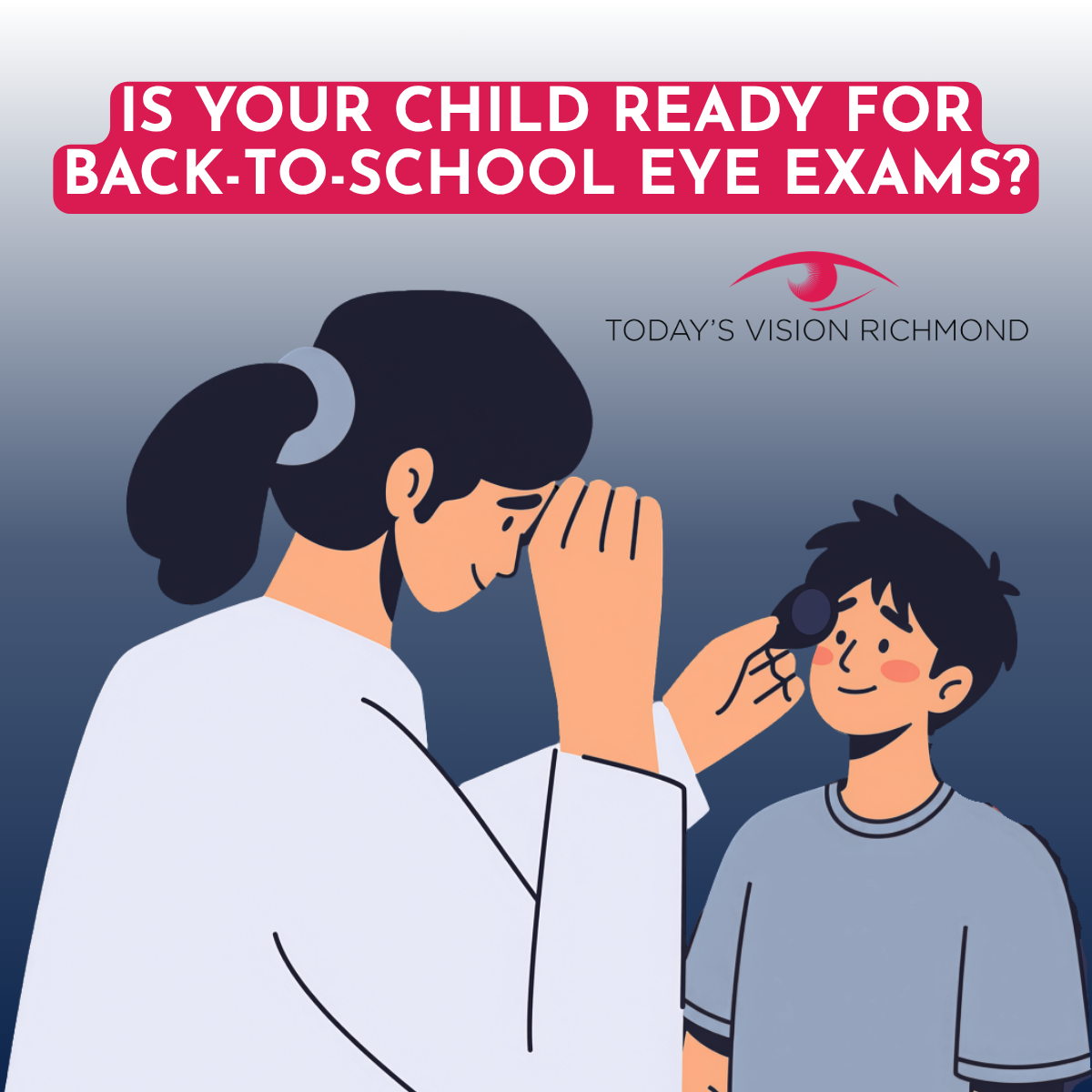
By August, most parents have checked off the essentials:
✓ Backpack✓ Notebooks✓ New clothes✓ Lunch box
But there's one back-to-school tool that often gets overlooked: Your child's vision.
The surprising part? Most children won't tell you when something is wrong. Not because they're hiding it. Because they assume everyone sees the world the way they do.
Imagine Reading a Book Like This...
Picture trying to read a page where the words occasionally blur.
Or where your eyes get tired halfway through a chapter.
Or where you have to work twice as hard to stay focused.
Now imagine doing that every day in a classroom.
Many children with vision problems don't realize they're compensating. They simply assume school is supposed to be difficult.
Good Grades Don't Always Mean Good Vision
One of the biggest misconceptions about children's eye health is that struggling students are the only ones who need eye exams. In reality, some children with vision problems perform very well academically.
They work harder.
They adapt.
They memorize.
They compensate.
By the time symptoms appear, they may already be experiencing headaches, fatigue, frustration, or difficulty concentrating.
School Screenings Don't Tell the Whole Story
School vision screenings serve an important purpose, but they primarily look for distance vision problems.
They may not identify:
Eye focusing difficulties
Eye teaming problems
Tracking issues
Depth perception concerns
Early eye health conditions
A child can pass a school screening and still have vision issues affecting learning.
Vision Is About More Than Seeing the Board
Reading, writing, sports, computer work, and classroom participation all depend on visual skills. Clear eyesight is only one piece of the puzzle. How efficiently the eyes work together matters just as much.
Before School Starts...
Ask yourself:
Does your child avoid reading?
Do they lose their place frequently?
Are headaches becoming more common?
Do they seem tired after school?
Have teachers mentioned attention concerns?
Sometimes the issue isn't motivation. Sometimes it's vision.
A comprehensive eye exam can help ensure your child begins the school year with every advantage possible.
Quick Links


© 2026 Today's Vision Richmond. All rights Reserved - Accessibility Statement - Privacy Policy - Sitemap

Powered by